
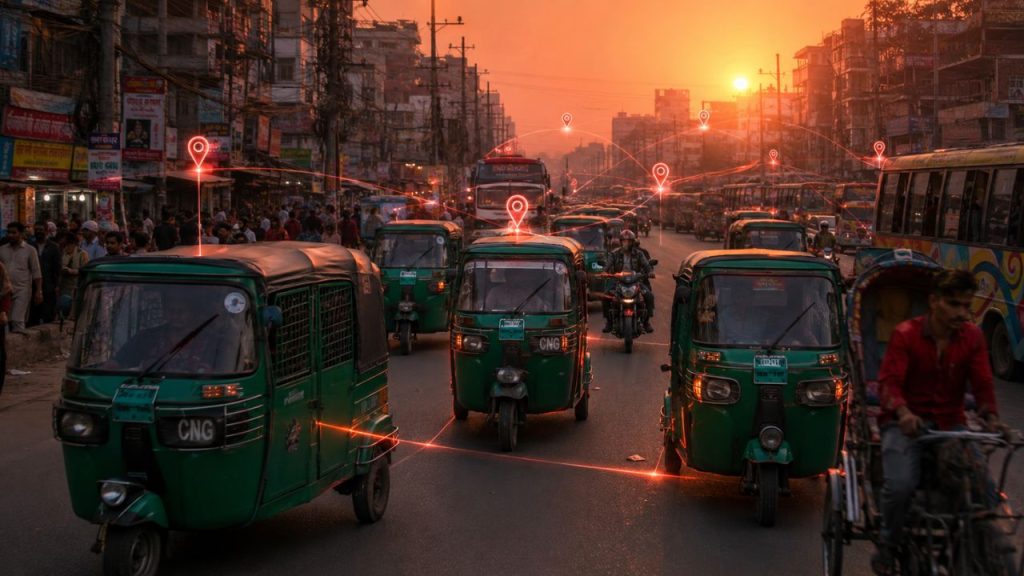
Anyone running a CNG fleet in Dhaka or Chattogram knows the headache: drivers going off-route, fuel bills that never quite add up, and no real way to know where a vehicle is until it turns up late, or doesn’t turn up at all. That gap is exactly what GPS tracking for CNGs is built to close. At iTracker, we work with fleet owners across Bangladesh who moved away from phone calls and guesswork to live tracking, and the difference usually shows up first in the fuel ledger, then in the trip count.
A fleet that runs on trust and phone calls can look fine on the surface for years, right up until fuel costs spike, a vehicle goes missing for a few hours, or a regular customer complains about a driver taking the long way round. By the time those problems show up, the money has usually already been lost.
What CNG Fleet Management Actually Covers
Running a CNG fleet isn’t just about owning vehicles. It’s vehicle tracking, driver monitoring, fuel control, route planning, and maintenance scheduling, five separate jobs that, without digital tools, end up depending entirely on a dispatcher’s memory and a driver’s honesty. Even a fleet of fifteen to twenty CNGs gets hard to manage properly this way, and the cracks usually show up in profit margins long before an owner figures out why.
Most owners manage all of this manually because it works while the fleet is small. The trouble is, manual systems don’t scale. Add a few more vehicles and a few more drivers, and the same methods that worked at five vehicles start failing at fifteen.
Where GPS Tracking Comes In
A GPS tracking system gives fleet owners something a dispatcher’s notebook never could: a live, unfiltered view of every vehicle on the road. Location, speed, idle time, route history, and geofence alerts all land on one screen instead of being scattered across phone calls and paper logs. That’s the foundation of any proper fleet management solution, and it’s the piece most CNG operators in Bangladesh have been running without.
This shift isn’t about replacing drivers or treating them with suspicion. It’s about giving an owner the same kind of visibility a much bigger company would have, without needing a much bigger office or staff.
Real-Time Visibility Changes How a Fleet Is Run
Once an owner can see where every vehicle actually is, a few things happen fairly quickly. Unauthorized detours get caught the same day instead of after a customer complaint. Dispatch decisions improve because the nearest available vehicle is obvious instead of guessed over the phone. Response times to pickups drop, and so does the back-and-forth that usually eats into a dispatcher’s day. With a live dashboard, managers in Dhaka can run an entire CNG lineup from one panel instead of juggling driver phone calls all day.
Fuel Costs Drop Once Idle Time Is Visible
Fuel is the single biggest recurring cost for any CNG operator, and it’s also the easiest to lose without noticing. GPS data exposes the patterns that quietly drain a fuel budget: long idling between trips, detours that add unnecessary kilometres, and routes that look fine on paper but waste fuel in practice.
Idle time is often the biggest surprise for owners who switch to tracking for the first time. A vehicle that sits running for twenty minutes between trips, multiplied across a fleet and a month, adds up to a real number on the fuel bill. Fix that pattern and the savings usually show up within the first billing cycle, not months later.
Smarter Routes for Dhaka’s Traffic
Anyone who has driven through Dhaka at peak hour knows route choice isn’t optional. GPS tracking for CNGs helps by suggesting shorter paths, flagging congestion before a driver drives straight into it, and shaving a few minutes off every trip. Those minutes add up. A vehicle that manages one extra trip a day because of better routing pays for the tracking system many times over across a year.
Route optimization also helps with something owners rarely think about until it becomes a problem: vehicle wear. Constant stop-start traffic on a badly chosen route wears down a CNG faster than a well-planned one covering the same distance.
Driver Behaviour Is the Part Owners Often Skip
Most fleet owners watch fuel and routes closely but pay little attention to how a vehicle is actually being driven. Hard braking, sudden acceleration, speeding, and unauthorized stops all show up clearly in GPS data, and all of them shorten vehicle life and raise accident risk. Once an owner can point to a specific incident instead of a vague complaint, conversations with drivers tend to get a lot more productive, and a lot less personal.
A driver who knows their behaviour is being recorded tends to drive more carefully on their own, simply because the accountability is there. Owners who use tracking data this way often describe it as the biggest change in how their drivers behave day to day.
Geofencing Keeps Vehicles Where They’re Supposed to Be
Geofencing sets a virtual boundary around the area a vehicle is allowed to operate in. Step outside it and the system flags it right away. For owners dealing with route discipline problems or restricted zones, this one feature often does more to curb misuse than any amount of manual supervision. It’s also useful for protecting drivers from being blamed unfairly. If a vehicle never left its assigned zone, a geofence alert proves that clearly.
Less Downtime, More Running Days
A CNG sitting in a garage earns nothing. Tracking systems that monitor journey patterns and flag overused vehicles let owners schedule maintenance before something fails, instead of finding out on the side of the road. Planned maintenance beats emergency repairs every time, both on cost and on the number of working days a vehicle actually delivers in a month.
A vehicle that breaks down unexpectedly doesn’t just cost the repair bill. It costs every trip that vehicle would have made while it sat in a workshop.
Faster, More Reliable Service for Passengers
Passengers notice when a CNG arrives on time, and they notice when dispatch genuinely knows where the nearest vehicle is. Accurate arrival estimates and tighter dispatch coordination, both made possible by live tracking, lead directly to fewer complaints and more repeat riders, which matters more in a competitive transport market than most owners give it credit for.
More Trips From the Same Fleet
This is really the bottom line. Fewer delays, better routing, and tighter driver accountability mean a fleet can run more trips without adding a single vehicle. For an owner weighing the cost of a tracking system against the cost of buying another CNG, the math usually isn’t close. Adding a vehicle means a new purchase, registration, insurance, and a new driver to manage.
Security and Faster Recovery
Theft and unauthorized use are real risks in this business. Live location data, instant movement alerts, and the ability to monitor a vehicle remotely give owners a genuine shot at quick recovery instead of a total loss. This kind of response time is often the single feature that convinces a hesitant owner to finally make the switch.
What a Fleet Looks Like Without Tracking
Take the tracking system away and the old problems come straight back. No real-time visibility, fuel disappearing into idle engines, drivers running their own routes, and customer complaints nobody can verify either way. The cost of not tracking a fleet rarely shows up as one big number. It shows up slowly, in fuel bills that creep up, vehicles that age faster than they should, and a handful of customers who quietly stop calling.
What to Look for in the Best GPS Tracker in Bangladesh
Not every tracking system sold in this market actually understands it. A tracker worth using here should handle Dhaka-style traffic data well, support geofencing for the zones that matter to your business, send maintenance alerts before breakdowns happen, and put everything on a dashboard a dispatcher can use without a week of training.
It also helps if the provider understands the realities of running a fleet here specifically: how local traffic patterns differ from one area to another, how drivers are typically paid and managed, and what kind of support an owner actually needs when something goes wrong at midnight rather than during office hours. That’s the brief iTracker was built around: something practical for local fleet owners, not a long feature list nobody touches.
Why CNG Fleet Owners Work With iTracker
We built our fleet management solution around the way CNG fleets actually operate in Bangladesh: local traffic patterns, local driver habits, and local maintenance realities. It isn’t a system designed somewhere else and adapted for this market afterward.
If you’re still running CNGs on phone calls and guesswork, it’s worth seeing how our GPS tracking for CNGs works in practice, or getting in touch with our team through the about us page to talk through what your fleet actually needs. Every fleet is a little different, and the right setup usually depends on fleet size, the areas covered, and how hands-on an owner wants to be with day-to-day monitoring. Fuel costs aren’t getting cheaper, and customers aren’t getting more patient. The fleet owners who adapt now are the ones still turning a profit in two years.