
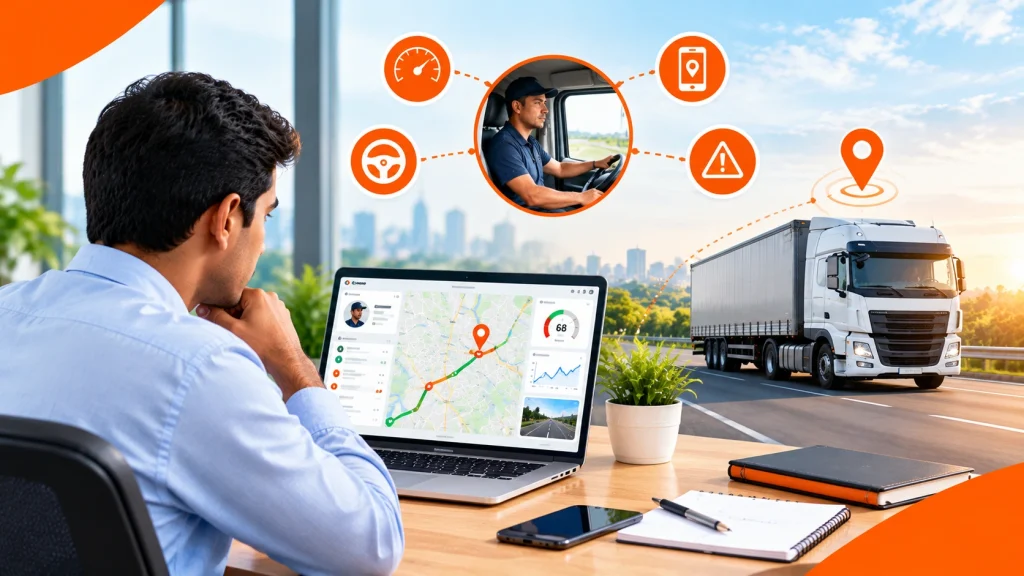
When you have a clear understanding of what’s going on on the road, managing drivers becomes much easier. Just because a car arrives on time at its destination from the office doesn’t mean it’s been driven safely. These are a few examples of practices that can impact safety, fuel costs, vehicle maintenance, and overall fleet performance, when performed at excessive speeds, engaged unnecessarily, while using harsh braking, enabling drivers to accelerate too quickly, or when the driver is performing trips without authorization. This is where GPS tracking for driver behaviour can come into play. The aim is not just to observe drivers. When used correctly, GPS tracking can be a tool for a safer, more efficient and more accountable driving experience.
So, What Is Driver Behavior Monitoring?
To gather and analyse data on the operation of a vehicle is called driver behaviour monitoring. The basic GPS tracker will provide you with information about where a vehicle is located at a given point in time. The more advanced car tracking systems can offer supplemental data that can help in the identification of driving patterns. This can range from speeding events, hard acceleration, rapid deceleration, too much idling, route deviations, unauthorized movements and others relating to driving activities. Specific characteristics will differ from GPS tracking device to platform. Other systems can optionally connect to vehicle data or to other sensors to offer a more comprehensive range of insights into driver and vehicle behavior. Fleet Managers can look at the actual tracking data, which provides objective data, rather than just rely on driver reports or assumptions, and find trends that they should pay attention to.
How Does GPS Tracking Monitor Driver Behavior?
A Vehicle GPS tracker is responsible for receiving positioning data and transmitting information to a tracking platform. The platform can then compare the movement of the vehicles with the rules or thresholds configured. For instance, if a fleet manager establishes a speed limit, the system can alert vehicles when they drive above the limit. Likewise, multiple harsh brake applications can be a clue to a driving style that needs to be explored. When the system does this, it can report on the information, show it in a dashboard, map it, or send you an alert, depending on the platform. This converts raw location data into more meaningful information for fleet management. Remember, GPS tracking doesn’t necessarily account for how a driver handled themselves. In some cases, there might be a valid reason for a speeding warning. Data should be used to inform patterns, and to initiate discussion and dialogue, but not to be used as a basis for judging a driver.
Behaviors of Drivers That Can Be Tracked With GPS
Behaviors that can be tracked vary by GPS tracker and vehicle integration but there are several common behaviors that are useful for fleet management.
Speeding
One of the most apparent driving practices that GPS tracking can detect is speeding. A fleet manager can set the speed alerts or consult the report to find out how many times a vehicle is breaking the defined speed limits. It’s better to look at patterns than on one isolated event. While occasional speeding is permissible, if the speeding occurs on more than one trip it suggests a training or safety problem.
Harsh Braking
Sudden braking may be linked to aggressive driving, being too close to the vehicle in front, road conditions or traffic. If a driver repeatedly experiences harsh braking situations, fleet managers can look into providing further training for that driver or consider assessing specific routes and how they consistently cause problems for drivers.
Rapid Acceleration
Rough acceleration places increased wear on the vehicle, and can affect fuel economy. It can also be an indication of aggressive driving. The ability to identify acceleration events in tracking systems is useful for fleet managers to determine if this is a recurring or sporadic occurrence.
Excessive Idling
Idling is when the engine is started but the vehicle is not moving. There are situations, such as in traffic or in some operations, where idling cannot be avoided. Too much idling can, however, use up fuel, and lead to unnecessary engine running time. GPS tracking can also be used to determine if vehicles are idling longer than usual, which can then be investigated and more efficient practice put in place.
Unauthorized Trips
Using a GPS tracking system can also help determine if vehicles are moving around outside of the expected schedules and routes. For instance, a company might find that a vehicle is being driven outside of working hours or that it is being driven to a site that is not related to a specific task. This information can be used to help detect if the vehicle is being used unlawfully, depending on their company policy. Again, context matters. A tracking alert should not be a conclusion, it should be a call to verify.
Route Deviations
GPS tracking can be used to flag major deviations if drivers are anticipated to be driving along certain routes. Route deviations can occur for legitimate purposes including road closures, congestion, emergencies and customer requests. Both the driver and the conditions on the road are important and reviewing these events can help managers to understand both.
Why Use GPS Tracking To Monitor Driver Behavior?
The primary reason is safety. It can be challenging for a company with multiple vehicles to determine risky driving habits by observing. Managers are not able to be physically in place on every road and every trip. Another source of information is GPS tracking. If a pattern of repeated speeding, hard braking, rapid acceleration, or other factors are detected, management can focus on them by coaching and driver education. There may also be work benefits. These improvements in driving may lead to lower fuel consumption, unnecessary vehicle deterioration and unsaved maintenance expenses. Driver behavior monitoring can evolve over time to be more than just monitoring an employee – it can be an integrated part of a fleet safety program.
Set Clear Rules Before Installing a GPS Tracker
With driver monitoring, clear expectations are more likely to lead to success. Companies should inform customers before installing GPS tracking devices on their vehicles which information will be gathered, why it will be gathered, who will have access to the information and how the information will be used. Staff should be familiar with company rules and regulations regarding vehicle use, speed alerts, route alterations, after hours driving, and other areas of monitoring. Applicable employment, privacy and data protection needs must also be taken into account when setting up employee monitoring. It is an effective way to avoid misunderstandings and create trust between management and drivers.
How Fleet Managers Can Use GPS Tracking Reports
A tracking platform could generate a vast amount of data. The question is, what matters, really? Fleet managers can instead consider patterns in the alerts, rather than every alert. For instance, look at the types of vehicles, the drivers who are idling more than usual, or the routes that result in multiple severe braking events. Data comparisons over time are even more beneficial. The fewer the number of risky driving events recorded after training, the more effective the training was. Likewise, if you have some unusual occurrences with more than one driver on a specific route, then the route could be the cause of the problem. It’s not only about collecting data, it’s about interpreting that data that’s good fleet management.
Could GPS Tracking Help Improve Fleet Safety?
Yes, if done correctly. GPS tracking provides fleet managers with visibility that they might not be able to get otherwise. It can detect hazardous driving behaviors, alert drivers, assist in driver coaching, and record driving operations for analysis by the fleet manager. GPS tracking is just one component of a comprehensive fleet safety strategy, however. Business enterprises need to leverage technology, driver training, vehicle maintenance, policy development, scheduling, and periodic safety checks. The tracker can never be the substitute for responsible management or good driving practice.
Selecting a GPS Tracking System for Driver Tracking
If you are looking for GPS trackers to monitor driver behavior, don’t settle for one that can just show you a vehicle on a map. Check out what monitoring and reporting features are relevant in your fleet. This can range from speed alerts to trip history, geofencing, idle time monitoring, routes, driver behavior reports, and real-time notifications. Be sure to take into account the ease of system use for managers as well. A platform that generates lots of information that is hard to understand, may not provide much value. Other factors to consider are reliability, mobile access, ease of reporting, support, and installation. When companies are considering vehicle tracking and fleet monitoring solutions, IFAD Autos might be a good option to review and consider how GPS technology can be incorporated into the normal management of their vehicles.
Commonly Asked Questions About GPS Driver Behavior Monitoring
Is it possible for GPS tracking to track a driver’s actions?
Yes, if you are using a GPS tracking system. Other advanced systems are able to detect speeding, aggressive braking, rapid acceleration, prolonged idling, off-route vehicle movement, and more.
Is it possible for the GPS tracker to see if the driver is speeding?
Most GPS tracking systems for vehicles can identify and report a vehicle’s speed and compare it to the limits set in the tracking system or road speed data. This of course depends on the tracker and platform used.
Is it possible to measure harsh braking using GPS?
Some GPS trackers and telematics systems can detect sudden acceleration decreases that happen during a hard braking event. Different devices can have different sensitivity and reporting methods.
Can GPS tracks provide details of a driver’s activities?
No. The basic data that a GPS tracker is able to gather from the device and platform is location and vehicle data. It is not a complete view of all activity within or around the vehicle.
Does GPS tracking work for small businesses?
Yes. GPS tracking for small businesses can also help those who have a few cars to keep an eye on vehicle locations, review trips, enhance accountability, and discover vehicle driving behaviors that may be unsafe or inefficient.
Is tracking by GPS a way to save fuel?
Can help recognize unnecessary driving habits that lead to increased fuel consumption, like aggressive acceleration and too much idling. The savings realized will vary based on the business’ reaction to the information and the change in driver behavior.
Should GPS tracking be a punishment to drivers?
It is best used in conjunction with a clear safety and performance plan. Tracking data can help determine the coaching and improvement areas and repeated or serious violations can be addressed per the company’s policies.
Final Thoughts
GPS tracking for driver monitoring is more than just tracking movement across a map. By analyzing driving patterns with the right system, businesses can discover drivability factors that can impact safety, fuel consumption, vehicle maintenance, and fleet performance. When used in conjunction with responsible fleet management, GPS tracking is a practical solution to developing safer drivers and more efficient vehicle operations. When businesses are looking at implementing a vehicle GPS tracking system, the first step is to select a platform that has the proper vehicle monitoring, reporting and alert capabilities.