
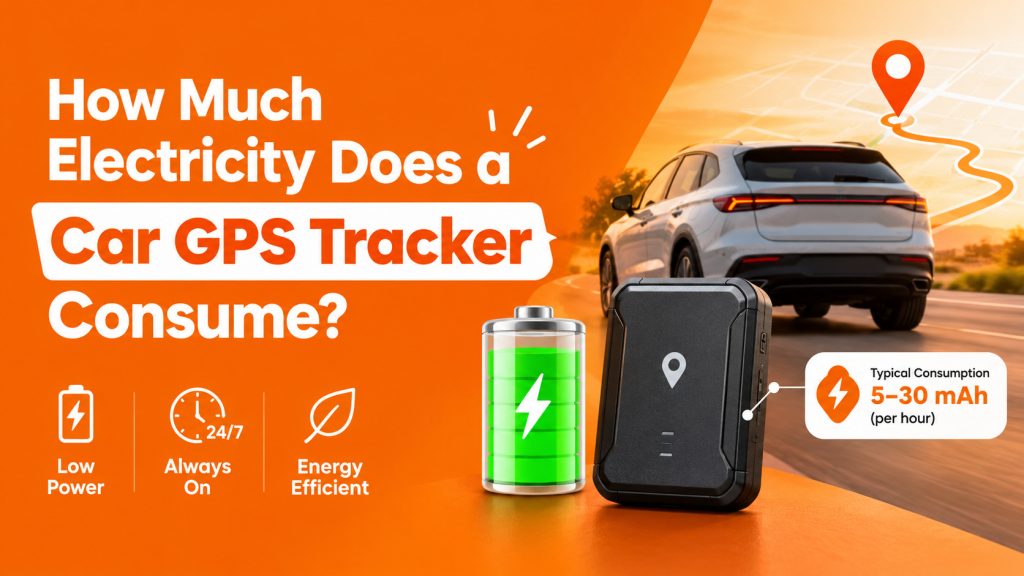
If you are planning to install a GPS tracker in your car, one common question is: How much electricity does a car GPS tracker use? Many car owners in Bangladesh worry that installing a GPS tracking device could drain the vehicle battery or create electrical problems. In most cases, a properly installed, low-power GPS tracker uses only a small amount of electricity compared with the overall electrical system of a car. However, power consumption can vary depending on the GPS tracker model, tracking frequency, communication technology, installation method, and features being used. For car owners looking for the Best GPS Tracker for Car in Bangladesh, understanding power consumption is important. A good tracking device should provide useful security and monitoring features without putting unnecessary stress on the vehicle battery. In this guide, we explain how a car GPS tracker uses electricity, whether it can drain your battery, what happens when your car is parked, and how to choose a suitable tracking solution such as iTracker.
How Does A Car GPS Tracker Use Electricity?
A vehicle GPS tracker needs electrical power to perform several important functions. First, the device uses power to receive GPS signals and determine the vehicle’s location. It also needs electricity to communicate with the mobile network and send location information to the tracking platform. Inside the device, electronic components process and sometimes store tracking information before sending it to the connected system. When your car is moving, the GPS tracker can remain actively connected and regularly update the vehicle’s location. This can require more power than when the vehicle is parked and the tracker enters a low-power or standby mode. For Example, A Device drawing 20 mA from a 12V electrical system would theoretically consume:
12V × 0.02A = 0.24 watts
That is a relatively small electrical load. However, actual power consumption can change depending on how the tracker operates. The manufacturer’s technical specifications are therefore more useful than assuming every GPS tracker consumes the same amount of electricity.
Does a GPS Tracker Drain Your Car Battery?
Yes, A Hardwired GPS tracker uses some electricity from the vehicle, even when the engine is switched off. However, a properly installed low-power tracker generally uses a relatively small amount of energy. The bigger concern is usually long-term parking. Your car already has several electrical systems that may continue using a small amount of power after the ignition is turned off. This is commonly known as standby or parasitic electrical draw. Adding a GPS tracker increases the total electrical load slightly. If you drive your car regularly, the alternator normally helps recharge the battery while the engine is running. But if your car remains parked for many days or weeks, the combined electrical loads can gradually reduce the battery’s charge.
The effect depends on several factors, including:
- Battery age
- Battery condition
- Vehicle electrical systems
- Tracker power consumption
- Tracking frequency
- Weather and temperature
- How long the vehicle remains unused
Therefore, a GPS tracker should not automatically be blamed whenever a car battery becomes weak. An old or damaged battery can also be a major reason for starting problems.
How Much Power Does A GPS Tracker Use While Driving?
When your car is running, the electrical system is being supplied by the vehicle’s charging system. The alternator powers the vehicle’s electrical components and helps recharge the battery. Because of this, the relatively small electrical demand of a GPS tracking device is normally only a small part of the vehicle’s overall electrical consumption. However, GPS trackers can use different amounts of power depending on how frequently they communicate. For example, a tracker that sends location information very frequently may use more energy than a device that sends updates at longer intervals. For personal vehicles, the ideal configuration should balance tracking requirements with efficient power management. For commercial vehicles and fleets, more frequent tracking may be useful because businesses may need detailed information about vehicle movement, driver behavior, routes, and operating times. A solution such as iTracker can provide real-time vehicle monitoring along with alerts and reports, allowing vehicle owners and businesses to monitor their vehicles more effectively.
How Much Electricity Does A GPS Tracker Use When the Car Is Parked?
Power management becomes particularly important when your car is parked. A well-designed vehicle GPS tracker may use a sleep or low-power mode when the vehicle is stationary. Instead of continuously operating at full capacity, the device can reduce its activity and wake up when necessary. mDepending on the device and configuration, the tracker may become active when:
- The vehicle starts moving
- A location update is required
- An alert needs to be sent
- The ignition status changes
- A configured tracking event occurs
- A security feature is triggered
This type of power management can reduce unnecessary battery consumption while keeping important tracking functions available. However, not every GPS tracker behaves in exactly the same way. Some devices may continue communicating periodically while the vehicle is parked. Before installing a GPS tracker, ask the provider about its standby current, sleep-mode operation, battery protection, and installation requirements. For Bangladesh’s vehicle owners, these details can be especially useful when choosing the Best GPS Tracker for Car in Bangladesh.
What Factors Affect GPS Tracker Power Consumption?
Several factors can influence how much electricity a car GPS tracker uses.
1. Tracking Frequency
Tracking frequency is one of the most important factors. A device that frequently determines its location and sends updates may consume more power than one that communicates less frequently. If you need detailed real-time monitoring, higher tracking activity may be appropriate. If your priority is basic vehicle security, a lower-power configuration may be sufficient.
2. Mobile Network Communication
A GPS tracker normally communicates with a mobile network to send vehicle information to its tracking platform. Network conditions can affect power consumption. When the device has difficulty maintaining a connection, it may need to work harder to communicate.
3. GPS Activity
The tracker needs to determine the vehicle’s position using GPS signals. The frequency of location checks can affect energy use. More frequent location updates can mean greater activity from the device.
4. Additional Features
Advanced tracking features can also affect power requirements. Depending on the model, these may include:
- Ignition monitoring
- Overspeed alerts
- Geofencing
- Driver behavior monitoring
- Vehicle status monitoring
- Engine-related information
- Remote control functions
- Detailed reporting
iTracker provides features such as real-time tracking, overspeed alerts, vehicle status information, reports, alerts and notifications, and remote shutdown on applicable solutions.
5. Vehicle Battery Condition
The condition of your car battery also matters. A healthy battery can handle normal standby loads better than an old or weak battery. If your vehicle already has difficulty starting, adding any additional electrical device should be considered carefully.
Understanding GPS Tracker Battery Consumption
One simple way to understand electrical consumption is through milliamp-hours (mAh). Suppose a tracker continuously draws 20 mA.
Over 24 hours:
20 mA × 24 hours = 480 mAh per day
Over 30 days:
480 mAh × 30 = 14,400 mAh
That is approximately:
14.4 Ah
However, this is only a theoretical calculation based on a constant 20 mA draw. Real GPS trackers may not continuously consume the same amount of power. A device using sleep mode may have a much lower average consumption, while a tracker communicating frequently may use more. It is also important not to assume that a car battery’s full rated capacity is completely available for GPS tracking. A vehicle starting battery must retain enough charge to start the engine, and its usable performance can be affected by battery age, temperature, vehicle electronics, and battery condition. Therefore, theoretical calculations are useful for understanding power consumption but should not be used to predict exactly how long a particular vehicle can remain parked before its battery becomes too weak to start.
Can A GPS Tracker Cause Car Battery Problems?
A GPS tracker can contribute to battery drain because it is an electrical device connected to the vehicle. However, battery problems are more likely when several factors occur together. For example, problems can become more noticeable when:
- The car has an old battery
- The vehicle is rarely driven
- The vehicle already has excessive parasitic draw
- The tracker consumes more power than expected
- The tracker is incorrectly installed
- The car remains parked for a long time
Installation quality is also important. A hardwired GPS tracker should be installed according to the manufacturer’s recommended wiring method. Incorrect wiring can cause unwanted electrical issues and may prevent the device from operating as intended. For this reason, professional installation is a useful consideration when choosing a vehicle tracking service.
How Can You Reduce GPS Tracker Battery Drain?
You do not necessarily have to sacrifice useful tracking features to reduce power consumption. Here are some practical steps:
Choose an Efficient GPS Tracker
Look for a device designed with efficient power management. Check the technical specifications instead of relying only on marketing terms such as “low power.”
Use an Appropriate Tracking Interval
If you do not require extremely frequent location updates, an appropriate reporting interval may help reduce unnecessary communication and power use.
Check Sleep Mode
Ask whether the GPS tracker supports a low-power or sleep mode when the vehicle is stationary.
Check Battery Protection
Battery protection features can be useful, particularly for vehicles that are sometimes left unused for long periods.
Maintain Your Car Battery
If your battery is several years old or your car regularly struggles to start, inspect the battery rather than assuming the GPS tracker is the only cause.
Use Professional Installation
Correct installation can reduce the risk of wiring problems and ensure that the GPS tracker operates according to its intended configuration.
Why Choose iTracker for Car GPS Tracking in Bangladesh?
Choosing a GPS tracker is not only about how much electricity the device consumes. You should also consider the quality of the tracking platform, alerts, reporting system, installation support, and vehicle-management features. iTracker provides GPS tracking solutions for private cars as well as commercial vehicles in Bangladesh. Its website lists features including real-time tracking, vehicle status monitoring, engine on/off status, overspeed alerts, trip history, daily summaries, device removal alerts, and other vehicle-management functions. iTracker also provides nationwide installation and after-sales support. Its platform can be accessed through mobile devices and web applications, allowing users to monitor vehicles and receive alerts while away from their computers. For Car owners who want a practical combination of vehicle security, location monitoring, alerts, and reporting, these features can be important when comparing GPS tracking options in Bangladesh.
What Should You Look for in the Best GPS Tracker for Car in Bangladesh?
When comparing GPS trackers, do not focus only on the price. Consider the following factors:
Real-Time Tracking
A good tracking system should allow you to monitor your vehicle’s location and movement through an appropriate platform.
Security Alerts
Look for alerts that can notify you about events such as unauthorized movement, overspeeding, ignition activity, or device removal.
Battery Protection
Check the device’s standby consumption, sleep mode, and battery protection features.
Accurate Location Information
Location accuracy is important for both personal vehicle monitoring and commercial fleet management.
Mobile App and Web Access
A mobile application makes it easier to check your vehicle while you are away from your computer.
Reporting
Detailed reports can help you review trips, distance, stops, vehicle activity, and other information.
Installation Support
Professional installation can help ensure that the tracker is correctly connected to your vehicle.
After-Sales Support
GPS tracking is an ongoing service, so customer support can be important when you need help with the device or tracking platform.
Is a GPS Tracker Worth the Small Amount of Electricity It Uses?
For many car owners and businesses, A GPS tracker can provide useful vehicle visibility while using a relatively small amount of electrical power. The key is choosing a device that matches your vehicle and tracking requirements. If your priority is vehicle security, real-time monitoring, driver safety, route visibility, or fleet management, the information provided by a GPS tracker can be more valuable than the small amount of electricity required to operate the device. The important thing is to select an appropriate device, configure it correctly, maintain your car battery, and have the tracker professionally installed. For Bangladesh-based vehicle owners considering the Best GPS Tracker for Car in Bangladesh, iTracker offers vehicle tracking solutions designed for private cars, commercial vehicles, and fleet operations.
Frequently Asked Questions
Does a car GPS tracker consume a lot of electricity?
No. Most vehicle GPS trackers are designed to use relatively low power. However, actual consumption depends on the device, tracking frequency, communication activity, operating mode, and enabled features.
Can a GPS tracker kill a car battery?
A GPS tracker can contribute to battery drain because it continues to use some electricity, particularly when hardwired. The risk becomes more noticeable when a vehicle is parked for a long period, has a weak battery, or the tracker has higher power consumption.
Does a GPS tracker use electricity when the car is turned off?
Many hardwired GPS trackers continue to draw a small amount of power after the ignition is turned off. Some devices use sleep or low-power modes to reduce consumption while the vehicle is parked.
How long can a GPS tracker remain connected to a parked car?
There is no single answer for every vehicle. The duration depends on the car battery’s capacity and condition, the vehicle’s existing electrical load, tracker consumption, temperature, tracking settings, and how long the vehicle remains unused.
Does GPS tracking use more battery than GPS navigation?
GPS tracking and navigation work differently. Navigation is generally used actively while driving, whereas a dedicated vehicle tracker may continue monitoring or communicating periodically when the car is parked. Actual power consumption depends on the specific devices and their operating modes.
What should I check before buying a low-power GPS tracker?
Check the device’s standby consumption, active current, tracking frequency, sleep mode, battery protection, installation requirements, and manufacturer’s specifications.
Is iTracker suitable for private cars?
Yes. iTracker offers a private car GPS tracker solution with features such as real-time tracking, speed alerts, and vehicle monitoring.
Is iTracker available across Bangladesh?
iTracker states that it provides nationwide installation and after-sales service. Its website also lists dedicated GPS tracking services in locations including Dhaka, Chittagong, and Sylhet.
Final Thoughts
A car GPS tracker does use electricity, but the amount is generally small compared with the vehicle’s overall electrical system. The more important consideration is what happens when the car is switched off and remains parked for an extended period. Power consumption can vary based on tracking frequency, GPS activity, mobile network communication, sleep mode, additional features, battery condition, and installation quality. Therefore, when choosing the Best GPS Tracker for Car in Bangladesh, do not look only at tracking features or price. Consider power consumption, battery protection, installation, real-time monitoring, alerts, reporting, mobile access, and after-sales support. With the right GPS tracker and proper installation, you can monitor your vehicle, improve security, understand driving activity, and maintain better visibility of your car without placing unnecessary strain on its battery. iTracker provides GPS tracking solutions for private cars, commercial vehicles, and fleets in Bangladesh, with features designed to support real-time monitoring, security, reporting, and vehicle management.