
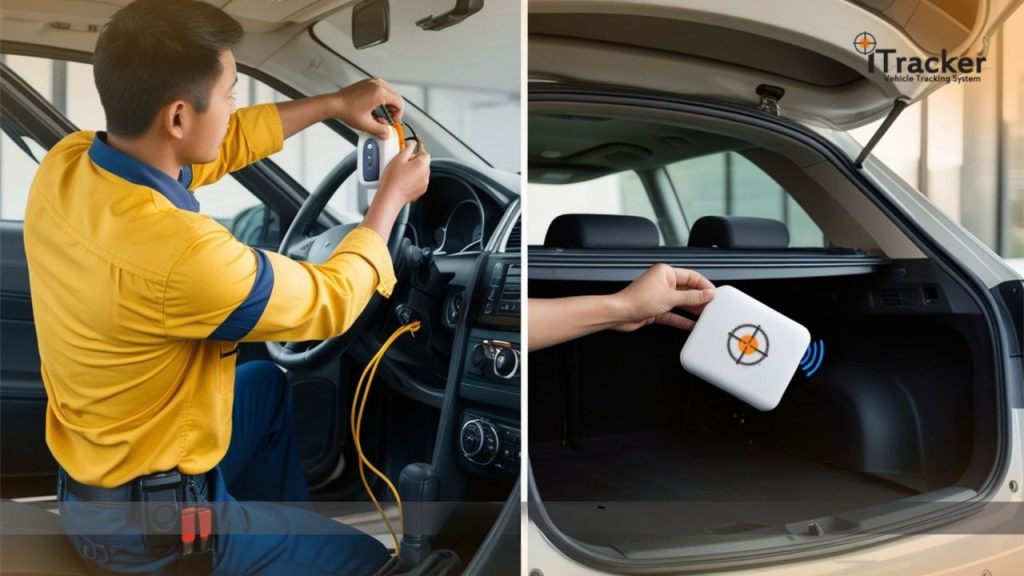
GPS (Global Positioning System) tracking is now mandatory in vehicles, assets, and personal safety. When it comes to controlling a fleet, keeping a guard on your car, tracking valuable equipment, or simply keeping track of your personal items, you should consider the correct type of GPS, wired or wireless, as that can make a substantial difference in how it performs, is reliable, and is cost-effective. iTracker is here to let you know everything about Wired Vs. Wireless GPS! Keep reading!
What Is GPS Tracking?
GPS tracking involves the use of satellites in order to establish the precise position of a device. These systems assist the user in monitoring movement, speed, and route history, among others. There are general types of GPS devices, which include:
Wired GPS Trackers: Wired directly into a car’s electrical system.
Wireless GPS Trackers: Portable and battery-operated devices that do not require wiring.
These types possess their own strengths and are appropriate in this or that case.
Wired GPS Trackers
A wired GPS is hardwired to the electrical system of a vehicle (battery or ignition), typically. The systems are battery-free and can be installed in the car discreetly.
Key Features of Wired GPS
- The power supply is constant: Batteries do not have to be replenished or changed.
- Live tracking: This is a constant, real-time positioning.
- Geofencing: Establishing a virtual boundary and getting notified when the vehicle moves out of it.
- Integration to vehicle data: Can read ignition, speed, and in some cases, fuel consumption.
Wireless GPS Trackers
The wireless GPS tracker is powered by an internal battery and does not require a network to any electrical system of a vehicle. They are typically small in size and portable, making them one of the Best GPS Tracker in Bangladesh options for users seeking flexibility and convenience.
Key Features of Wireless GPS
Portable and discreet: It can be attached to vehicles, assets, or personal possessions, offering versatility that makes it among the best GPS tracker in Bangladesh for various tracking needs.
Installation free: No wiring or professional setup needed, which is why many consider wireless models the best GPS tracker in Bangladesh for hassle-free deployment.
Flexible applications: Applications in vehicles, cargo, equipment, luggage, or even backpacks make these devices the best GPS tracker in Bangladesh for both personal and business use.
Battery-powered: These need to be charged up or have batteries changed regularly to maintain their performance as the best GPS tracker in Bangladesh for your tracking requirements.
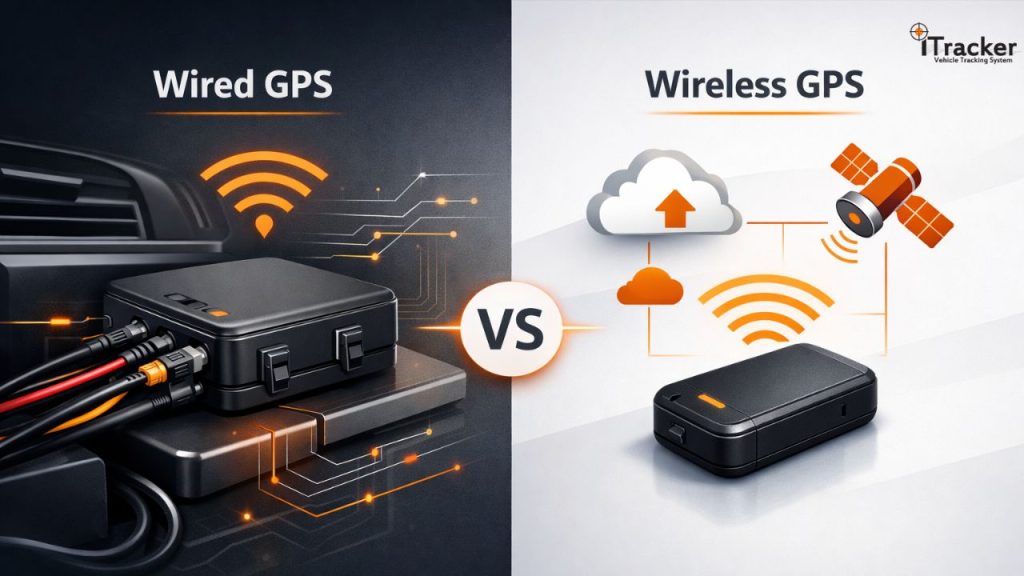
Comparison of Wired and Wireless GPS
This is a direct comparison of the main factors so that you may make a decision on the type of GPS that best fits you.
- Power Source and Reliability
Wired GPS:
- Related to the battery of the vehicle – no downtime as a result of loss of power.
- Provides constant tracking and little signal disruption.
- Very useful in monitoring vehicles over a long period of time.
Wireless GPS:
- Electric powered; requires recharging or replacement of batteries periodically.
- Reliability is based on the battery life. The tracking stops with battery death.
- Recommended for use when it comes to short-term or mobile requirements.
Winner: Wired GPS is more dependable when it comes to continuous tracking.
2. Installation and Setup
Wired GPS:
- Professional installation needs to be done by a technician.
- Wires should be concealed and properly connected in order to work best.
Wireless GPS:
- Simple system to install, no tooling and expert assistance required.
- All you have to do is place the device on or in the object that you would like to track.
Winner: Wireless GPS Easier, faster, and less expensive to install.
3. Tracking Performance
Wired GPS:
- Less fluctuation in connection because of steady power.
- More applicable in real-time tracking, speed monitoring, and journey history.
Wireless GPS:
- Performs work in infrequent tracking.
- May contains updates that are delayed depending on the device preferences and battery saving.
Winner: Wired GPS provides greater accuracy in performance.
4. Stealth and Portability
Wired GPS
- It can be installed permanently, but fixed to the vehicle.
Wireless GPS
- Small-sized and portable- This can be moved between things or cars with ease.
- May be concealed in luggage, tool boxes, or gear.
Winner: Wireless GPS is versatile and portable.
5. Use Cases and Flexibility
Wired GPS
Ideal for:
- Fleet management
- Constant surveillance of the vehicles.
- Tracking of company cars on a long-term basis.
- Logistics and transport companies.
Wireless GPS
Ideal for:
- Tracking rental vehicles
- Tracking cargos or trailers.
- Personal property, such as luggage or bags
- Temporary tracking needs
Winner: It depends on your needs.
6. Security and Anti-Tampering
Wired GPS
- More difficult to find and steal as it is part of the electrical system in the vehicle.
- Being less evident and more indelible.
Wireless GPS
- Removed or hidden more easily
- Flexibility of placement can lead to device tampering
Winner: Wired GPS is harder to tamper with.
7. Maintenance and Cost
Wired GPS
- A professional setup increases the costs of installation.
- Little maintenance is required after installation.
Wireless GPS
- Reduced initial price and no installation charges.
- Repeatedly need to replace or charge batteries.
Winner: Wireless GPS has a lower initial price, although think of battery maintenance in the long run.
Wired GPS: Pros and Cons
Pros
- The power is continuous with no breaks.
- More appropriate for real-time monitoring.
- Less vulnerable and easier to infiltrate.
- Appropriate in the case of long-term tracking.
Cons
- Higher installation cost
- Professional assistance might be needed in installation.
- Less portable
Wireless GPS: Pros and Cons
Pros
- Easy, no-installation setup
- Portable and versatile
- Lower upfront cost
Well-suited in the case of temporary or multi-object tracking.
Cons
- Limited by battery life
- Manual maintenance is necessary
- May provide diminished update rates
The Right GPS: How to Select the Right GPS
The following is just a basic guideline according to typical requirements:
Choose Wired GPS if:
- Vehicles require 24/7 tracking.
- You run a fleet of cars, trucks, or buses.
- Prevention of theft and security is a priority.
- You desire fine-grained information such as ignition or speed history.
Choose Wireless GPS if:
- You need portable tracking
- You need to follow things, goods, or personal objects.
- You like simple plug-and-play.
- You desire temporary tracking or periodic tracking.
Real-World Examples
Fleet Management
Logistics companies in Dhaka opt to use wired GPS to track everything, route optimization, and fuel.
Personal Vehicle
If a person simply wishes to track their vehicles occasionally, a wireless GPS fits perfectly since it is easy to install and has flexibility.
Cargo Tracking
Businesses utilize wireless GPS to track containers and pallets on their way to the destination. for international transport of goods.
Safety and Legal Considerations
In Bangladesh, there are no significant safety or legal issues. GPS tracking is not prohibited in Bangladesh, provided that:
- The installation of the device is with the consent of the owner.
- Individual privacy is observed.
- The tracking is in accordance with telecom and information policy.
The GPS systems should always be used ethically and legally by consumers.
Conclusion
No single response can be used in every situation. Rather, it is a matter of what you want to achieve. The knowledge of your unique needs, budget, and use case will enable you to make the correct choice and make your GPS tracking system bring the greatest possible benefit. Hopefully, this guide, ‘Wired Vs. Wireless GPS: Which is Better for You?’ has been insightful!