
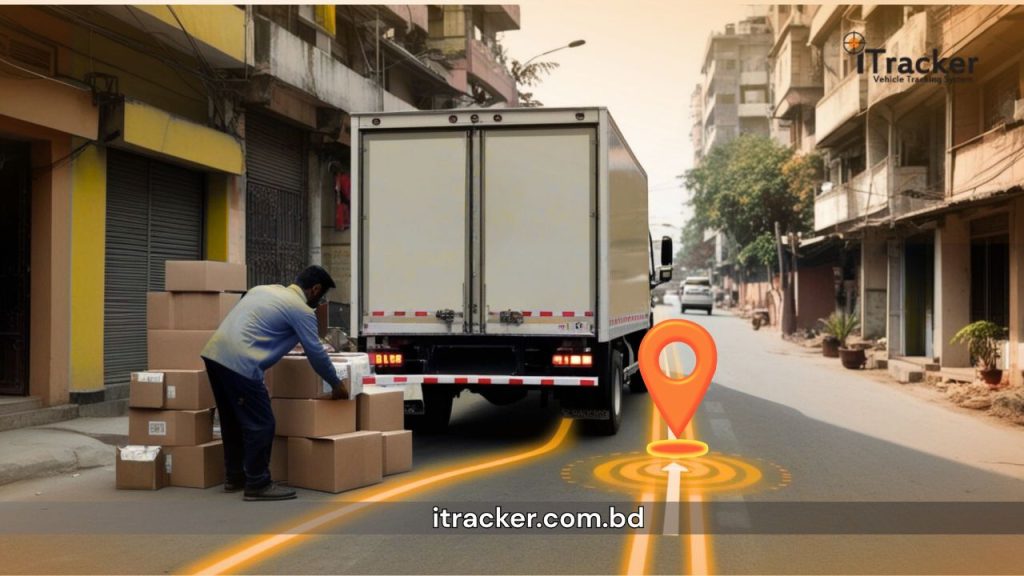
The logistics industry in Bangladesh is booming because of the e-commerce boom, the growth of industries, and the surge in consumer demand of the consumers to have their goods to be delivered faster. Issues such as traffic jams, fuel efficiency, theft of cargo, and real-time visibility usually lower the efficiency of operations. This is where the GPS tracking systems come in a transformational role. GPS Tracking has become a critical part of logistics companies in Bangladesh by facilitating real-time tracking and optimization of routes and making decisions based on the data. iTracker is here to let you know how GPS tracking helps logistics companies in Bangladesh!
Live Tracking and Visibility of Vehicles
Real-time visibility of vehicles in the chain of supply is one of the greatest benefits of GPS tracking.
- The logistics managers are able to monitor the precise position of trucks, vans, and delivery bikes.
- Customers are provided with the right information on the delivery, enhancing their transparency.
- Traffic jams, roadblocks or divergence of the route can be knowingly detected in real time.
- The owners are able to route cars in real time to evade congestion.
In a country such as Bangladesh that has a lot of traffic, and Dhaka and Chattogram more so, real-time tracking is very helpful in enhancing the reliability of deliveries.
Better Routing and Timesaving
GPS tracking is a system that utilizes information about the location to optimize routes of delivery.
- There is a possibility to choose the shortest and fastest routes automatically.
- Delays on some roads, which is experienced frequently, can be circumvented in the future.
- It is possible to plan several deliveries on the same route efficiently.
- Unutilized time and unwarranted routes are minimized.
In the case of logistics firms that deliver in large quantities, optimized routes will minimize the delivery time and make customers more satisfied.
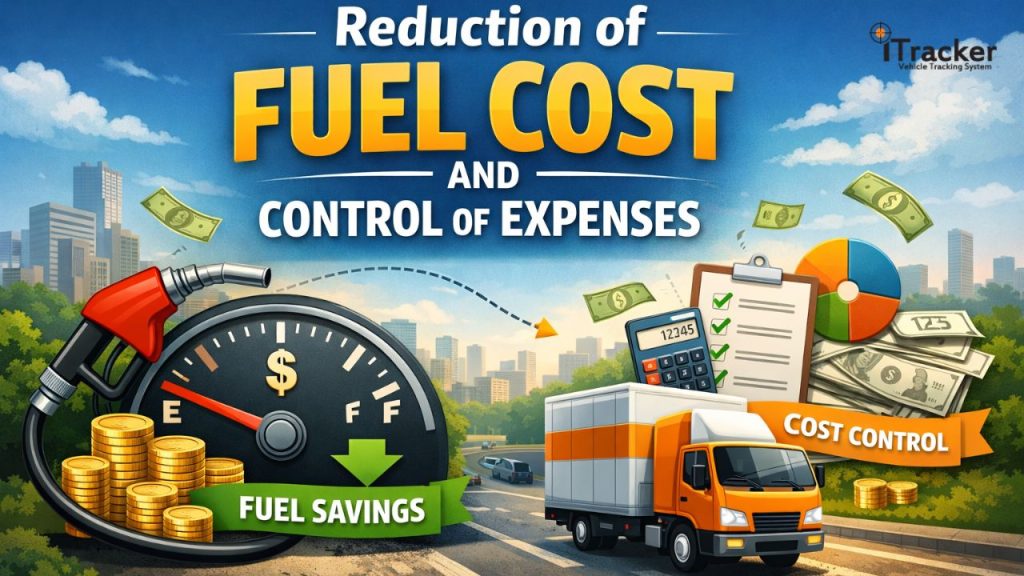
Reduction of Fuel Cost and Control of Expenses
One of the highest operational costs of logistics companies in Bangladesh is fuel. The cost of fuel is controlled by having a GPS tracking system that enables more effective monitoring.
- Identifies wastage of fuel through poor driving.
- Determines the use of vehicles after working hours.
- Minimizes idle time by the engine.
- Takes into consideration fuel-efficient routes.
Through GPS-generated reports, companies would save a lot of fuel money in the long run.
Improved Fleet Management Performance
It is hard to control a big fleet manually, and it is also subject to mistakes. GPS tracking systems bring all the fleet information to a single platform.
- The ability to monitor vehicle performance individually is possible.
- The maintenance schedules may be scheduled depending on the usage and the mileage.
- Breakdown risk is minimized with the help of preventive maintenance warnings.
- The use of fleets can be examined in order to get rid of vehicles that are not used properly.
It will result in improved asset management and increase vehicle life cycle.
Cargo Security and Theft Prevention
Theft of vehicles and cargo is an issue of concern to the logistics operators in Bangladesh. Bonus security is offered by GPS tracking.
- It is possible to track vehicles in case they are stolen or hijacked.
- Geofencing will send a notification to the manager when a vehicle goes out of an allotted route or area.
- Unsafe locations allow instant alerts when stopped.
- There are systems that can immobilize the engines remotely.
All these features help considerably to decrease financial losses and enhance insurance compliance.
Improved and More Accountable Driver Monitoring
The safety, fuel consumption, and delivery performance directly depend on the behavior of drivers. GPS tracking enables companies to track driving behaviour.
- Overspeeding, hard braking, and sharp turns.
- Determines dangerous or irresponsible road behaviors.
- Promotes responsible driving by giving performance reports.
- Enhances good general road safety and minimizes accidents.
Having clear data, companies will be able to train drivers better and give good performance incentives.
Customer Delivery Proof and Customer Trust
GPS tracking also offers credible data on the delivery, which is essential to gain credibility with customers.
- The successful deliveries are verified by time-stamped location information.
- Minimizes disagreements over late or missed deliveries.
- Provides automated delivery reports to corporate clients.
- Enhances service-level agreement (SLA).
This is particularly useful for supply chains in e-commerce logistics and B2B in Bangladesh.
Data-Driven Business Decision Making
The Latest GPS trackers in Bangladesh provide elaborate analytics and reporting.
- Daily, weekly, and monthly performance reports.
- Trend in fuel consumption and analysis of costs.
- Comparison of route efficiency.
- Scorecards for the performance of drivers.
These lessons will assist logistics firms to make relevant decisions, enhance planning and sustainably scale their operations.
Adherence to Government and Corporate Requirements
GPS tracking is a way to ensure that the logistics companies in Bangladesh remain compliant with the country as it transitions to smarter regulation of transport.
- Provides government GPS standards to commercial vehicles.
- Helps fulfill client reporting and tracking requirements in companies.
- Streamlines the audit and compliance records.
- Improves regulatory authority transparency.
This especially applies to the businesses that deal with multinational customers.
Competitive Advantage in an Emerging Market
Bangladesh’s logistics market is getting very competitive. GPS tracking is an effective advantage to companies.
- Quicker deliveries enhance the retention of customers.
- Lower cost of operation boosts profitability.
- Open operations achieve corporate contracts.
- Expansion of business is supported by scalable systems.
The prompt introduction of GPS technology will make the logistics companies dependable and technology-intuitive service providers.
Challenges without GPS Tracking in Bangladesh
Some of the most common challenges facing logistics companies that do not use GPS tracking are:
- Low transparency of fleet movement.
- Increased maintenance and fuel expenses.
- Increased delivery delays
- Limited accountability
- More chance of looting and abuse.
On the contrary, GPS-based operations are more organized, efficient, and profitable.
Future of GPS Tracking in the Bangladesh Logistics Industry
GPS tracking systems are becoming more intelligent with the development of AI, IoT, and data analytics.
- Anticipatory maintenance warnings.
- AI-based route forecasting
- Connection with warehouse management systems.
- Instant customer alerts
The GPS tracking will become a necessity, not an optionl as the logistics ecosystem in Bangladesh will evolve.
Conclusion
GPS tracking is a game changer of logistics companies in Bangladesh. The benefits are far-reaching, including real-time vehicle visibility, optimizing routes, fuel savings, security, and customer satisfaction. GPS tracking has become a necessity in a nation where the business prosperity of any kind directly depends on the efficiency of logistics. The companies that are adapting this technology in the current world will also dominate the logistics sector in the future. Hopefully, you understood how GPS tracking helps logistics companies in Bangladesh!